How can we help
Please let us know what you need, and one of our team will get back to you promptly
Please let us know what you need, and one of our team will get back to you promptly
Case Studies
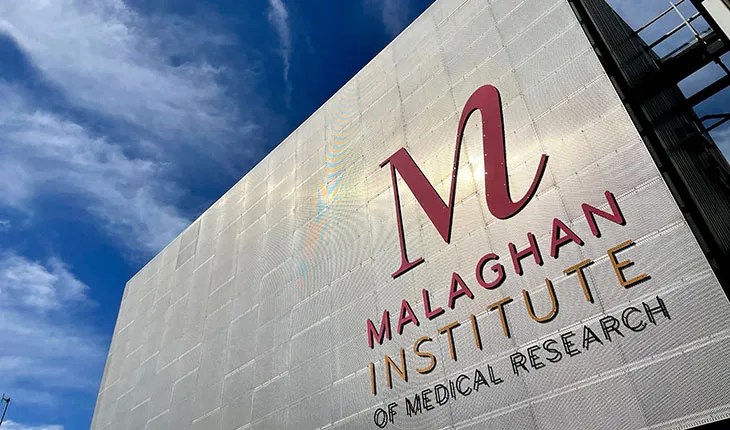
The Malaghan Institute of Medical Research is New Zealand’s world-class independent biomedical research charity, dedicated to breakthrough discoveries in immunology and immunotherapy. Home to more than 140 researchers and support staff - including senior scientists, postdoctoral fellows, and PhD and Master’s students - the Institute is based within Victoria University of Wellington and has been advancing the global understanding of the immune system’s role in fighting disease for over 50 years.
Learn more at malaghan.org.nz.
Running world-class biomedical research requires world-class infrastructure - and for Malaghan Institute, managing a large and growing inventory of clinical equipment meant that asset visibility was a critical operational priority. But the facilities function was being managed without a dedicated FM system.
Work requests were routed through an IT ticketing platform that was never designed for facilities or asset management, and planned maintenance was tracked manually through paper-based processes. The result was a fragmented picture of the estate that made it difficult to prioritise work, monitor asset health, or demonstrate compliance.
As a not-for-profit organisation operating with a lean team, Malaghan also needed a solution that could be implemented at a pace that suited their capacity - and supported by a responsive, reliable team when questions arose. Complexity and onerous onboarding were not options.
Malaghan Institute engaged FMI Works with a clear first priority: get assets into the system, get them linked to work requests, and shift the entire organisation onto a single, consistent maintenance request process. The team began by uploading and classifying asset data, establishing the foundational records needed to connect reactive requests to specific equipment and locations across the campus. Once that groundwork was in place, the focus turned to onboarding staff.
The transition was deliberately clean. The legacy IT ticketing system was switched off, and FMI Works was switched on - with QR codes installed in every room so that staff could raise a request directly from their phone, on the spot, the moment an issue was identified.
The familiarity of digital request logging, combined with the intuitive interface of FMI Works, meant the change required no formal training. The FMI Works Help Centre and support team provided backup as the facilities team familiarised themselves with the platform at their own pace.
“Out of necessity, we went cold turkey with the old request system - just turned it off, and turned FMI on. But by using the QR codes, we could ensure a seamless transition. Requests were still logged digitally, but now it could be done from a phone, while the issue is in front of you. The staff so far have reported that the system is easy enough to use that it hasn’t required any training.”
- Tim Dallas, Facilities Manager, Malaghan Institute of Medical Research
The switch to FMI Works was completed without disruption. Across an organisation of 140 researchers and support staff - many of whom are scientists, not facilities professionals - the new system was picked up intuitively, without any formal training programme.
The QR code rollout was central to this success, removing the barrier of navigating a new platform by giving every staff member an immediate, room-specific entry point to the request portal from their mobile device. Work requests are now captured accurately, consistently, and in real time.
“So far my interaction with the team has been really good - they come back straight away with a solution, and often provide us with supporting resources. It is really great to be able to go into the Help Centre and look things up; there is so much information in there.”
- Tim Dallas, Facilities Manager, Malaghan Institute of Medical Research
With campus expansion on the horizon, the Malaghan facilities team has been deliberate about building processes that will scale. Asset data is structured and centralised, the work request workflow is embedded across the organisation, and contractor management and planned maintenance modules are the next focus as the team deepens their use of the platform.
For an institute where the integrity of the physical environment directly supports the integrity of the science, having a reliable, scalable FM foundation is not incidental - it is essential.
“We’re really close to being able to utilise FMI for our contractor management, and as we become more familiar with the system, I’ll be easily able to upload all of our planned maintenance activities.”
- Tim Dallas, Facilities Manager, Malaghan Institute of Medical Research
Schedule a free demo of FMI Works to discover how we can help you centralise and streamline your facilities management processes.


See how facilities teams use the FMI platform to solve challenges and drive results.












If you like this story so much you'd like to share it with your friends, click the button below to access a take-home copy.
Explore latest industry insights, news and updates from the FMI Blog.
Subscribe to our monthly newsletter to get practical insights, industry updates, product news, and expert resources delivered to your inbox.